This article originally appeared on Homeland Security Today, authored by Robert Patterson, JSI’s SVP of Strategic Growth and Former Acting Administrator of the DEA. We’re sharing it here to reinforce the key steps every leader should consider when implementing AI responsibly.
Why it’s not a simple, one-size-fits-all solution for public safety and intelligence
Most conversations I have with public sector leaders begin the same way: “Our goal is to use AI to be more efficient.” It’s an understandable starting point. But from my experience – both as a purchaser of technology while in the government and now someone who helps agencies develop and implement solutions – the most crucial first step is different: truly understanding the problem you want to solve. This comes before getting caught up in the fear of falling behind the latest marketing hype or chasing technology trends.
This foundational work is often best done before you begin talking about building a solution in-house or hunting for the right vendor. While you might need outside expertise to grasp the full art of the possible, defining your end goal before seeking an actual solution is key.
Think about it like shopping for a car. When you step into a dealership, their main goal is to get you into one of their vehicles, not necessarily to find the perfect fit for your needs. It’s easy to get distracted by flashy features or what seems to be a great offer, rather than focusing on what really works best for you. And don’t feel bad, all of us have had that moment after buying a car when we say, “If only it did this…” So, rather than leaving it entirely up to someone else, taking the time to understand the basics yourself puts you on the path to the best solutions.
With this foundational mindset, the next step is to clearly understand the type and purpose of data you’re working with, especially in law enforcement and intelligence environments.
The Collection and Ingest of Data as Evidence or Intelligence
Not all data is the same. That’s why it’s critical from the outset to understand the nature of your data and be able to clearly express the product’s intended use case.
Law enforcement faces the urgent task of quickly identifying, verifying, and documenting evidence from a diverse range of digital and physical sources. When data is collected as evidence, the goal is to capture information that can directly support legal or judicial proceedings. That data must be accurate, reliable, and collected under strict protocols to withstand judicial scrutiny, preserving a clear chain of custody. It also must be verifiable, linked clearly to events or individuals to establish facts. Equally as important, it needs to be auditable with controlled access to maintain the integrity and custody of evidence wherever and whenever required.
On the other hand, data gathered for intelligence purposes aims to generate insights, spot trends, and provide foresight rather than establish direct proof. Intelligence work involves analyzing and synthesizing data from multiple, sometimes incomplete or indirect, sources to detect relationships, flag emerging threats, and generate actionable knowledge. This process requires expert interpretation. It’s less about proving facts and more about understanding the bigger picture to enable strategic decisions and proactive actions.
Although the purposes differ, both evidence and intelligence disciplines have long struggled with data silos, incompatible systems, and labor-intensive manual processes that slow down often time-sensitive operations.
Knowing the difference between evidence and intelligence data should inform how you choose to store and manage that data securely. Understanding these differences is critical because not all vendors are equipped to handle data as evidence or provide the necessary audit and permission capabilities.
Choosing the Right Data Management Approach
Data sovereignty is especially important for organizations managing sensitive or regulated information, the very essence of what public safety and intelligence investigators deal with regularly. Your choice between an on-premise or cloud solution impacts not only data sovereignty but also control, compliance, security, and operational flexibility. Each option offers unique strengths and carries distinct challenges.
On-Premise Systems:
On-premises systems provide full physical and administrative control over your data and infrastructure. Sensitive information remains within facilities governed directly by your organization, enabling the agency to store and process data within specific geographic boundaries to ensure compliance with local, state, and federal regulations such as Federal Information Security Management Act (FISMA), General Data Protection Regulation (GDPR), Health Insurance Portability and Accountability Act (HIPAA), and defense standards. The ability to internally customize security protocols, access controls, and auditing processes is invaluable for maintaining robust data sovereignty, often an essential requirement for public safety and intelligence operations.
Moreover, on-premise systems are immune to internet outages and typically deliver consistent, low-latency performance. Drawing from years in the telecom industry, I can attest to how crucial uninterrupted data access is, especially when lives and legal processes depend on it.
Agencies should carefully consider: can you afford to lose access to your data, even momentarily? Or worse, for extended periods beyond your control?
That said, on-premise setups require upfront capital investment in hardware, facilities, and IT staff. Your organization bears the responsibility for data protection, compliance audits, and maintenance, which can increase operational complexity and cost. Scalability and modernization may demand more planning but offer peace of mind that comes with uncompromised control. Secure remote access can be provisioned with established tools like virtual private networks(VPNs), ensuring flexibility without sacrificing safety.
Cloud-Based Systems:
Cloud environments, hosted by major providers, introduce appealing benefits such as geographic flexibility, rapid scaling, and lower upfront expenses through pay-as-you-go models. Providers maintain certifications – including ISO 27001, SOC 2, HIPAA, and GDPR – often delivering security controls that some organizations struggle to match independently.
However, cloud adoption most often requires relinquishing physical custody of your critical data to third-party vendors and accepting complex shared responsibility models. Legal interpretations across jurisdictions and vendor lock-in risks add layers of uncertainty. Dependence on internet connectivity also creates potential vulnerabilities in data availability.
Moreover, tailoring and auditing cloud environments to meet the nuanced demands of public safety agencies can be challenging, as detailed customization is often less transparent or flexible than on-premise systems.
Taken together, while cloud solutions deliver undeniable agility and innovation, the highest assurance of data sovereignty, operational reliability, and compliance precision still rests with on-premise deployments. For public safety and intelligence organizations handling the most sensitive data, this direct control offers unparalleled confidence amid evolving threats and regulatory demands.
Once you select your technology foundation, establishing comprehensive policies, governance frameworks, and thorough training remains essential for responsible AI and data management.
The Dreaded Policies and Procedures
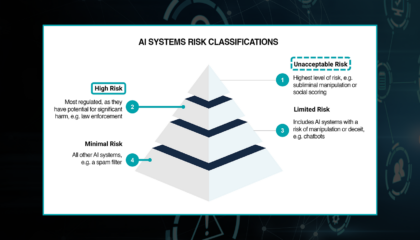
The 2025 U.S. executive orders on artificial intelligence mark a strategic pivot toward deregulation and rapid innovation aimed at preserving American leadership in AI. The initial order, Executive Order 14148, replaced previous oversight-heavy policies with a framework balancing ethical safeguards and civil rights alongside flexibility to foster AI development. This approach encourages faster AI adoption, including in law enforcement, while upholding standards to prevent bias and discrimination.
Additional executive orders strengthened law enforcement by modernizing technology use, removing barriers, providing legal protections, and encouraging confident integration of AI tools like predictive analytics and smart surveillance. The July 2025 America’s AI Action Plan furthers this vision through a whole-of-government strategy that invests in AI infrastructure, promotes public-private partnerships, and emphasizes workforce training and ethical deployment.
Together, these directives accelerate responsible AI adoption in law enforcement by balancing innovation with transparency, accountability, and public trust. Where possible, agencies should establish firm policies on data ownership, access controls, auditing, and transparency. AI-generated insights must be explainable and verifiable, ensuring accountability in investigations and analysis.
Personnel training should cover technical use as well as ethical frameworks. Interoperability with existing case management and intelligence platforms is also crucial to avoid redundancy and maintain smooth operations.
With strong policies and infrastructure in place, we can now examine how these tools enhance investigative and intelligence workflows.
Why All This Upfront Work Matters
When thoughtfully implemented, AI can deliver incredible payoffs.
AI for Analysis and Reporting:
AI enhances investigations by automating the extraction and correlation of key information. Natural language processing can interpret reports, emails, or transcripts to highlight entities, relationships, and recurring events. Pattern-recognition algorithms uncover connections between people, devices, or organizations that may otherwise go unnoticed. Predictive analytics assess risks or identify early signs of criminal or hostile activity.
These tools help investigators uncover cross-case similarities, prioritize leads, and organize digital evidence. For intelligence officers, AI helps shape clearer, data-driven narratives and generate concise summaries that transform complex data into actionable insights for decision-makers.
Rather than replacing human judgment, AI supports informed, timely decisions built on stronger evidentiary foundations.
Federated Search for Evidence Discovery and Data Access:
Federated search technology lets users search multiple, separate databases via a single secure interface. Instead of copying data, it retrieves results from original sources while respecting existing access restrictions and oversight policies.
For law enforcement, federated search identifies links between suspects, assets, and evidence across jurisdictions. It reduces redundant searches, uncovers overlooked connections, and saves valuable time during case development. For intelligence officers, it enables simultaneous searching across classified holdings, partner databases, and open-source materials to build a comprehensive view of a network or threat.
Governance and audit functions built into federated search ensure compliance with legal and organizational requirements, protecting data privacy and operational security.
Integrated Workflows and Collaboration:
Together, AI and federated search create seamless workflows connecting evidence collection in the field to analysis at headquarters. For example, an investigator using federated search might identify communications or financial records linked to multiple suspects. AI then ranks these records by relevance, highlighting potential associations or previously unseen patterns. Analysts can turn these insights into reports, threat assessments, or policy recommendations.
This integration accelerates operations, enhances information sharing, and strengthens both case outcomes and strategic understanding.
Conclusion
Navigating the evolving landscape of AI in public safety and intelligence requires thoughtful preparation and clear understanding. From defining the precise problem to choosing between on-premise and cloud solutions, every decision influences security, compliance, and operational success.
Policies, procedures, and ongoing training are not just checkboxes, but the foundations that empower organizations to deploy AI responsibly and effectively. The true strength of AI lies in supporting human judgment, speeding analysis, and uncovering insights that might otherwise remain hidden.
By embracing these principles and adhering to ethical and legal standards, public safety professionals can harness AI’s transformative power to enhance investigations, protect communities, and maintain public trust in a rapidly changing technological world.